Odoo implementation

Odoo Implementation Built Around Your Business

Implement Odoo around your real business processes: from discovery and configuration to customization, data migration, integrations, testing, training and go-live.

Reviewed by Bhavesh Selarka, COO & Co-Founder, Heliconia Solutions · Odoo 16 Functional Certification · Odoo Partner · Updated

Proof

Odoo PartnerCommunity + EnterpriseOCA contributorImplementation + engineeringMulti-company, multi-country

Clients

Businesses that run on what we built

  • Jo Ann's
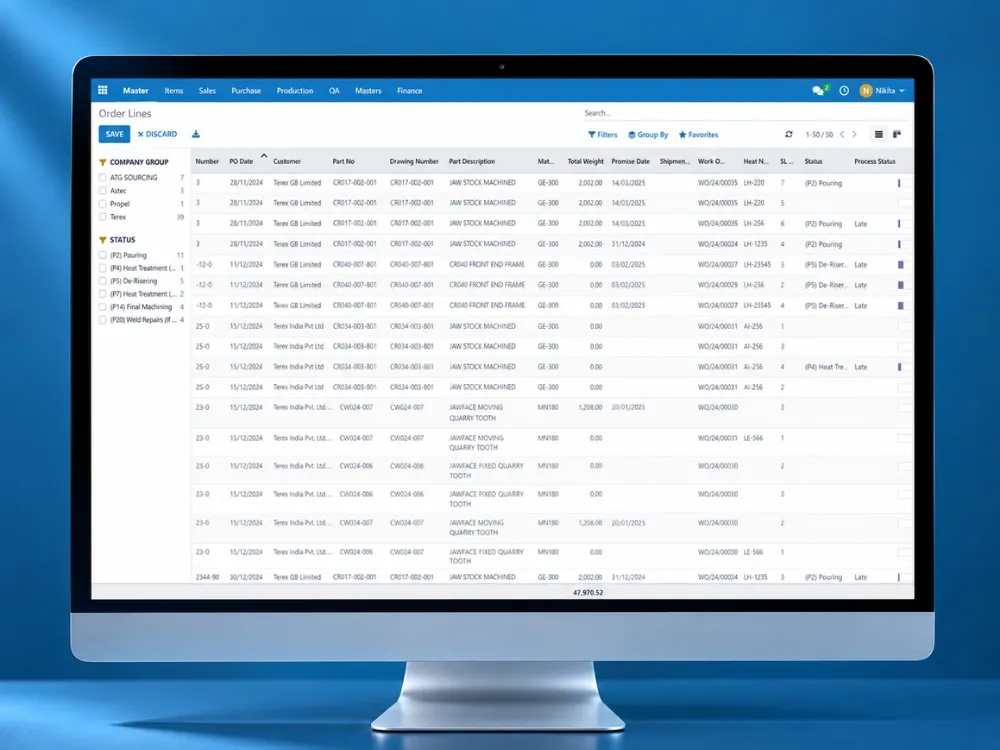
  • Baroda Hi-Tech Alloys
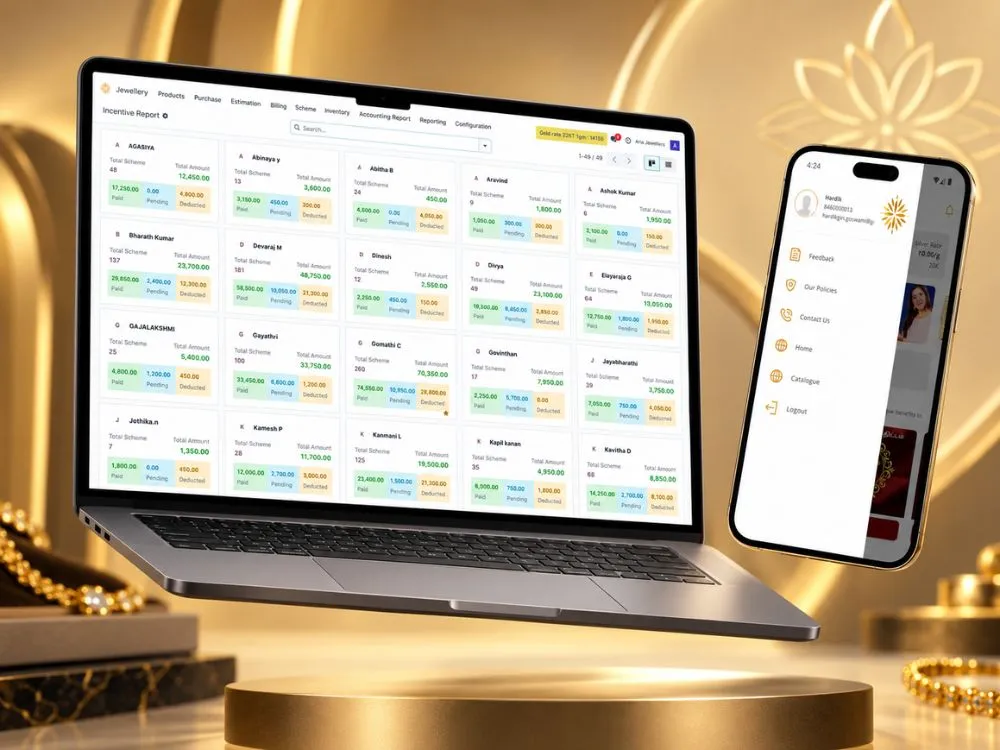
  • Aria Jewellers
  • Opsio
  • Mevalon Produkte
  • D.S. Associates
  • Freiburger Bund

What it includes

What Does an Odoo Implementation Include?

An Odoo implementation is the end-to-end work of taking a business from its current systems to running on Odoo: discovery, business process mapping, solution architecture, configuration, customization where standard functionality falls short, integrations, data migration, testing, training, go-live and post-launch support.

The mix is different for every business. A single company on Sales, Inventory and Accounting is mostly configuration and data work. A multi-company retailer across four countries with fiscal hardware, custom payroll and per-location security, like Jo Ann's, is an engineering project that happens to start with configuration.

That is the distinction that matters when you choose a partner. Configuration is table stakes. What separates implementations is how the team handles the parts Odoo doesn't do out of the box, and whether the result can be upgraded next year.

The lifecycle

From Business Problem to Production Odoo

Every implementation moves through these stages. What changes is how much weight each one carries.

  1. Discovery

    Workshops with the people who run each process: sales, operations, finance, warehouse. We document how the business actually works today, where it hurts, and which requirements are real versus inherited from the old system.

  2. Business process mapping

    Each workflow is mapped to Odoo: what standard functionality covers, what configuration handles, and what's genuinely missing. This is where the scope becomes honest.

  3. Solution architecture

    Edition (Community or Enterprise), hosting (Odoo.sh, cloud, on-premise), company structure, module selection, integration points and the customization plan: decided before anything is built.

  4. Configuration

    Companies, users and access rights, chart of accounts, taxes, warehouses and routes, products and pricelists, sales and purchase workflows. Standard Odoo, set up to match the mapped processes.

  5. Customization

    Custom modules for what configuration can't cover: built as separate modules, not core edits, so they survive upgrades. Only after we have checked for an existing OCA module.

  6. Integration

    Payment terminals and gateways, eCommerce, shipping, CRMs, SMS, mobile apps, existing internal systems, connected through APIs with error handling designed in.

  7. Data migration

    Master data (products, customers, vendors, chart of accounts) and the agreed transactional history, cleansed, mapped and validated with the business, in a test migration first.

  8. Testing and UAT

    Functional testing by us, then user acceptance testing by your team on real scenarios and migrated data, with a defect log we work through together.

  9. Training

    Role-based sessions on your configured system, not generic Odoo training. Process owners first, so they can support their teams after go-live.

  10. Go-live

    Final data cut-over, production deployment, and a hypercare period where the implementation team stays close to the system and its users.

  11. Support

    Implementation ends. The relationship usually doesn't. Enhancements, optimization and upgrades continue under a support engagement.

Implementation scope

Business Areas We Implement

The Odoo applications our implementations regularly cover, each backed by production systems we have delivered. The business-application pages go deeper on each family: supply chain, finance and accounting, sales and CRM, human resources, and service management.

  • CRM

    Leads, opportunities, pipelines and activities.

  • Sales

    Quotations, orders, pricelists, commissions and approval workflows.

  • Inventory

    Warehouses, routes, serialized and lot-tracked stock, barcodes, replenishment.

  • Purchase

    Vendors, RFQs, purchase orders and receipt workflows.

  • Accounting

    Invoicing, payments, multi-currency, bank integration, fiscal localizations.

  • Manufacturing

    Bills of materials, work orders, multi-stage production and quality steps.

  • HR & Payroll

    Employees, attendance, leave, recruitment and localized payroll.

  • Helpdesk & Projects

    Tickets, SLAs, projects, timesheets and profitability.

Configure first

Configure First. Customize Where It Matters.

Every requirement goes through the same ladder. Custom code is the last rung, not the first.

  1. Step 01

    Standard Odoo

    The requirement is met by a standard application as shipped. Most sales, purchase and accounting flows land here.

  2. Step 02

    Configuration

    Settings, automated actions, approval rules, custom fields and studio-level changes cover it without new code.

  3. Step 03

    OCA or existing module

    The Odoo Community Association or the app store already has a maintained module for it. We contribute to OCA, so we know what's there.

  4. Step 04

    Custom development

    The requirement is specific to your business: jewellery metal rates, foundry heat-to-part traceability, island payroll law. Built as a separate, upgrade-safe module.

Migration and integration

The Two Parts Most Implementations Underestimate

Evidence

Odoo Implementations We Have Delivered

Real production systems: edition, version, scope and what made each one hard.

All case studies

Timeline

How Long Does an Odoo Implementation Take?

We don't promise a fixed number before discovery. What we can tell you is what drives the timeline.

How Long Does an Odoo Implementation Take?
Project typeTypical complexityWhat drives it
Single company, standard appsLowerData quality, decision speed
Multi-module with light customizationMediumNumber of workflows to map, integrations
Complex customizationHighCustom module scope, testing effort
Multi-company / multi-countryHighLocalizations, per-entity rules, payroll
Headless or integrated systemVery highAPIs, frontend/mobile, external systems
Migration + re-implementationVery highLegacy data, custom module compatibility

Actual timelines depend on users, modules, customizations, integrations, migration volume, data quality, UAT capacity and how quickly decisions get made on your side. The engagements on this page run from a few months to multi-year partnerships with continuous enhancement.

Cost

How Much Does an Odoo Implementation Cost?

Odoo implementation cost depends primarily on the number of applications and users, the amount of custom development, integrations, data migration requirements and the deployment model, plus Enterprise licensing if you choose that edition. We scope and price project work after discovery, against a defined scope.

We don't publish a price list because a real number without a scope would be a guess. What we do publish is the shape of the engagement: project-based pricing for a defined implementation, and dedicated teams when the work is continuous.

First-party experience

What We Have Learned From Production Implementations

  1. 01

    The old system's quirks aren't requirements. Discovery has to separate what the business needs from what its previous software forced it to do.

  2. 02

    Data migration is where timelines slip. Cleansing legacy data starts in week one, not the week before go-live.

  3. 03

    Per-country rules are never "just a setting". Jo Ann's needed four payroll engines and a fiscal blackbox. That is architecture, not configuration.

  4. 04

    Custom modules built as core modifications become the next upgrade's biggest risk. Every customization we ship is a separate module.

  5. 05

    UAT succeeds when process owners test their own real scenarios on migrated data, not when a generic test script passes.

What clients say

In Their Words

Questions

Odoo Implementation Questions, Answered

Bhavesh Selarka

COO & Co-Founder, Heliconia Solutions

Not answered here? Ask Bhavesh directly, the person who reviewed this page, not a sales queue. Odoo 16 Functional Certification.

Ask a question

Can you migrate our existing data into Odoo?

Yes. Master data and the agreed transactional history are extracted from your current system, cleansed, mapped to Odoo and loaded into a test database first.

Your team validates the migrated data during UAT before the production cut-over. Migration from older Odoo versions follows the same process with custom-module compatibility work on top.

Odoo migration services

Can you customize Odoo during the implementation?

Yes: after confirming that configuration or an existing OCA module can't meet the requirement.

Customizations are built as separate modules that don't modify Odoo core, so they can be carried through future version upgrades.

Odoo customization

Can you integrate our existing applications?

Yes. Payment gateways and terminals, eCommerce platforms, shipping providers, CRMs, SMS/email services and custom or mobile applications are connected through Odoo's APIs or custom endpoints.

Integrations are designed with retries, logging and reconciliation so a failure is visible and recoverable, not silent.

Odoo integration services

Do you implement Odoo Community?

Yes. We implement both editions. Hi-Tech Alloys runs its foundry on Odoo 16 Community with extensive custom modules. Jo Ann's, Aria Jewellers and Opsio run Enterprise.

We help you decide which edition fits before implementation starts, and we contribute to the OCA modules that extend Community.

Odoo Community implementation

Do you provide support after go-live?

Yes. Go-live is followed by a hypercare period, and most implementations continue as an ongoing engineering relationship: enhancements, optimization and version upgrades.

Odoo support

Who from our side needs to be involved?

A decision-maker who can approve scope, and a process owner for each business area (sales, finance, operations, warehouse) for discovery, UAT and training.

Implementations stall when decisions wait. Naming these people early is the single biggest thing you can do for the timeline.

Which Odoo applications will we actually need?

Fewer than most vendors propose, and the right list comes out of the workflow, not a checklist. We start from how the business runs today, map each step to a standard app, then name what is left over as configuration or custom work.

The business-application pages show how we do that per family, with the decisions and the production evidence behind each.

Odoo by business application

What drives the cost of an Odoo implementation?

The number of apps, users, companies and countries, how much custom development the workflows need, the data to migrate and the systems to integrate. The edition matters too: Enterprise carries a per-user licence, Community doesn't.

We price project work against a defined scope after discovery, so the number you get is for the system you actually need, not a placeholder.

Estimate the scope and effort

Next step

Ready to Plan Your Odoo Implementation?

Tell us about your business, the systems you run today and what you need Odoo to do. We'll come back with an approach, not a brochure.